
Lights. Camera. Algorithm.
The Oscars Taught Us About AI, Storytelling, and Your Brand

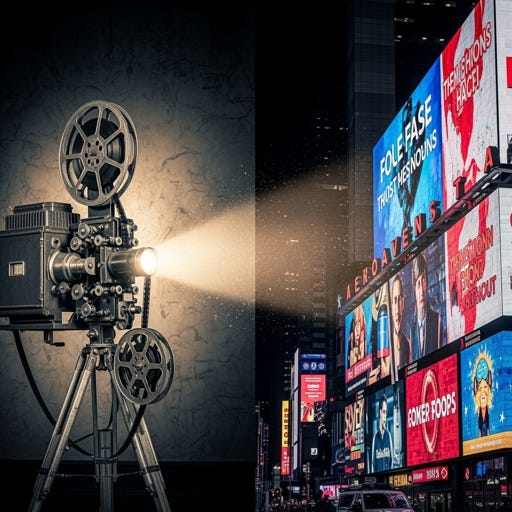
The first motion picture was screened in 1895. A train pulled into a station. Audience members reportedly ducked.
That’s the power of a moving image. It tricks the brain into believing something is real.
130 years later, the technology has changed beyond recognition. The power hasn’t moved an inch.
Moving images live everywhere now. On a 50-foot animated billboard in Times Square. On a 6-inch phone screen on the subway. In your email inbox. The canvas keeps changing. The storytelling instinct does not.
A few numbers worth watching:
Animated billboards and digital out-of-home screens are now a $20 billion global industry
LinkedIn video posts are shared 20x more than any other content type on the platform
Instagram Reels, TikTok, and YouTube Shorts generate hundreds of billions of views daily
82% of all internet traffic is now video
People watch over 1 billion hours of YouTube every single day
And yet. 17.9 million people still sat down together on a Sunday night to watch the Oscars
What the Oscars Showed Us This Year
This year’s ceremony was a masterclass in what technology can and cannot do.
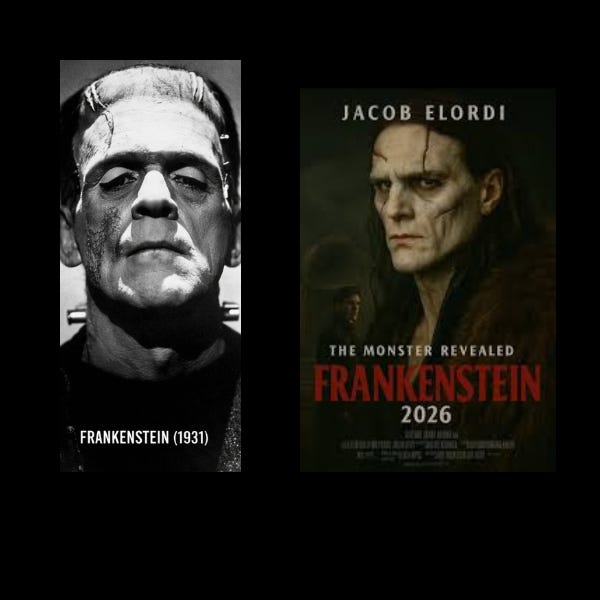
Guillermo del Toro’s “Frankenstein” won three Oscars for Production Design, Costume Design, and Makeup and Hairstyling. What made it extraordinary wasn’t the budget or the CGI alone. It was the combination of advanced digital techniques with old-fashioned practical effects. Real textures. Real materials. Real creature work designed to feel physical and grounded on screen. The Academy rewarded it precisely because it felt human.
“Avatar: Fire and Ash” won Best Visual Effects, making all three Cameron Avatar films Oscar winners for effects. He doesn’t use technology to show off. He uses it to put you inside a world you have never seen before.
“Sinners” used period-accurate visual storytelling set in 1932 Mississippi to create something that felt simultaneously historical and urgent. Sixteen nominations. A record. And here’s the tech story most people missed: Michael B. Jordan played twin brothers. To pull it off, the VFX team developed something called the Halo Rig, a harness with a ring of ten to twelve cameras that captured Jordan’s full head performance in real lighting conditions on set. Half the twin shots used classic split-screen. The other half used machine learning and digital face replacement built entirely from Jordan’s own performance data. Over 250 twin shots. More than 1,000 VFX shots total. And most audiences never noticed. That’s the point.
The pattern across all three: technology in service of story. Never the other way around.
The producers of this year’s ceremony said their theme was “celebrating actual intelligence, not artificial intelligence.” That line got laughs. It also landed because everyone in that room knows it’s true. Everyone in marketing should pay attention too.
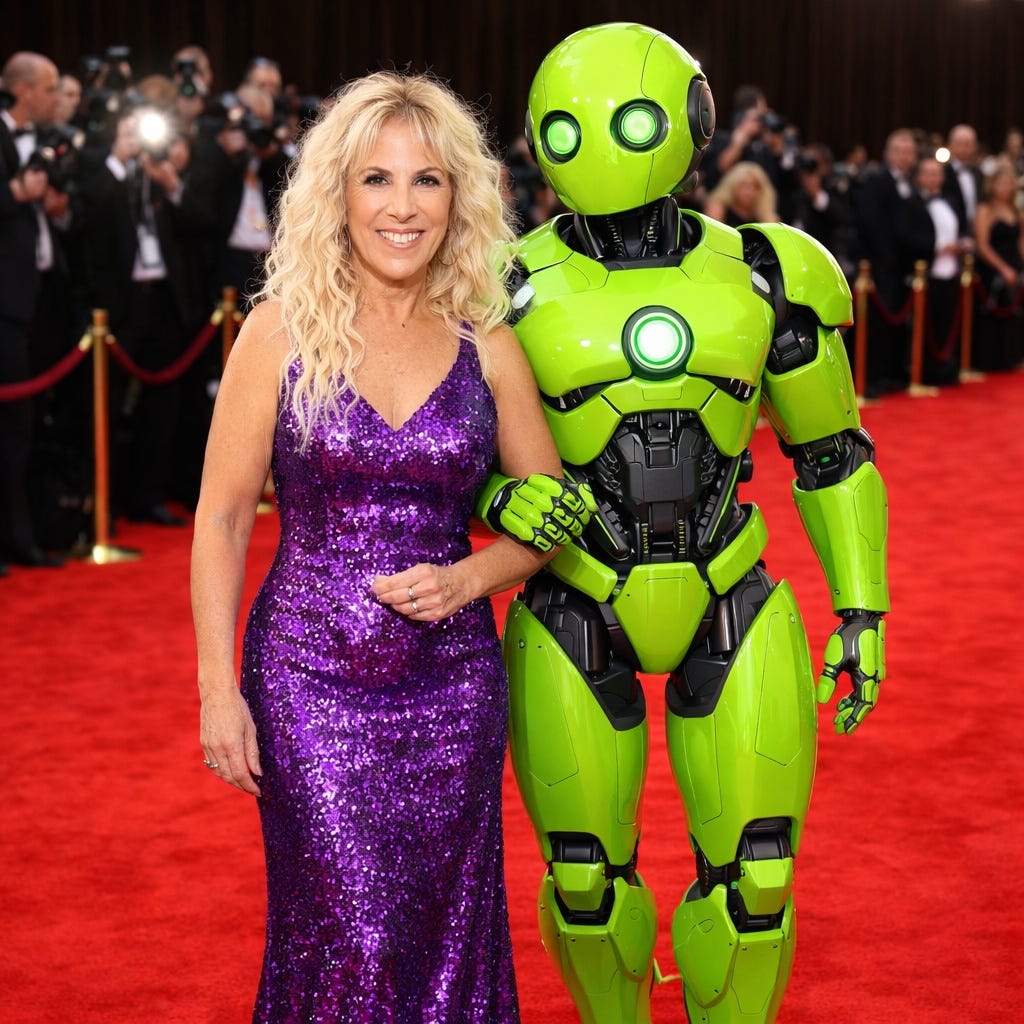
What Hollywood Has Always Known
Three things. Unchanged since 1895.
Creativity first. No budget or technology has ever saved a bad idea. The concept has to be worth making before anything else matters. True genius will always be human. AI can help, but great content is irresistible, built with intention, and designed to make someone think, laugh, or feel something they weren’t expecting. Rosebud lives on! (Check out Citizen Kane if you don’t get that one!)
The crew matters. Human strategic thinking with the right people around you and the right tools in the right sequence. The tools serve the vision. Not the other way around.
Distribution wins. Hollywood invented the multiplex, then home video, then streaming, then vertical format. But your content will die at the box office without a solid and strategic marketing plan.
What AI Can Do For Your Moving Images
An honest list. Not a sales pitch.
AI can:
Generate scripts, outlines, and storyboards in minutes
Produce voiceovers, animations, and short-form video from a single prompt
Repurpose one piece of long-form content into multiple video formats
Create images and visual concepts without a design budget
Research audience behavior and content gaps faster than any human team
Build interactive content and experiences your audience actually completes
Schedule, post, and monitor across platforms simultaneously
AI cannot:
Have a huge creative vision. No bot will ever equal Orson Welles or Spielberg
Know what only you know
Replace the instinct that comes from years of being in the room
Tell your story
Make a bad idea good
Know which tool to use and when
That last one is the whole game. Which tools? Which workflows? Which agents for which tasks? That’s what I charge for. The bAIbs (bad-ass AI broads) at theONswitch are standing by.
Now for Some Audience Participation!
Get Your “Rotten Tomatoes” Score
Rotten Tomatoes rates films on a scale of 0 to 100. Critics weigh in. Audiences weigh in. The gap between those two scores is often the most interesting story.
Here’s how I rated myself on moving image content:
Originality of concept: 92
Distribution strategy: 88
Intentional use of AI: 95
Knowing when NOT to use AI: 97
Overall: 93% Fresh
The 7% that’s rotten? I’m working on it!
Are you AI Rotten or Fresh?
Take YOUR Quiz HERE!
The Bottom Line
The first moving image made people duck.
The best content still should.
Creativity. Crew. Distribution. The special effects are the last thing you add. Not the first.
Want to know which AI tools are actually worth your time for video and content creation? That conversation starts at theONswitch.com.
Check back Sunday for Part 2!
I gave the same video brief to two different AI agents and got two very different results. Which one would win an Oscar? You're the judge.