

Bot-Jacked
Tech Gives You Nasty Habits. Here's How to Break Them

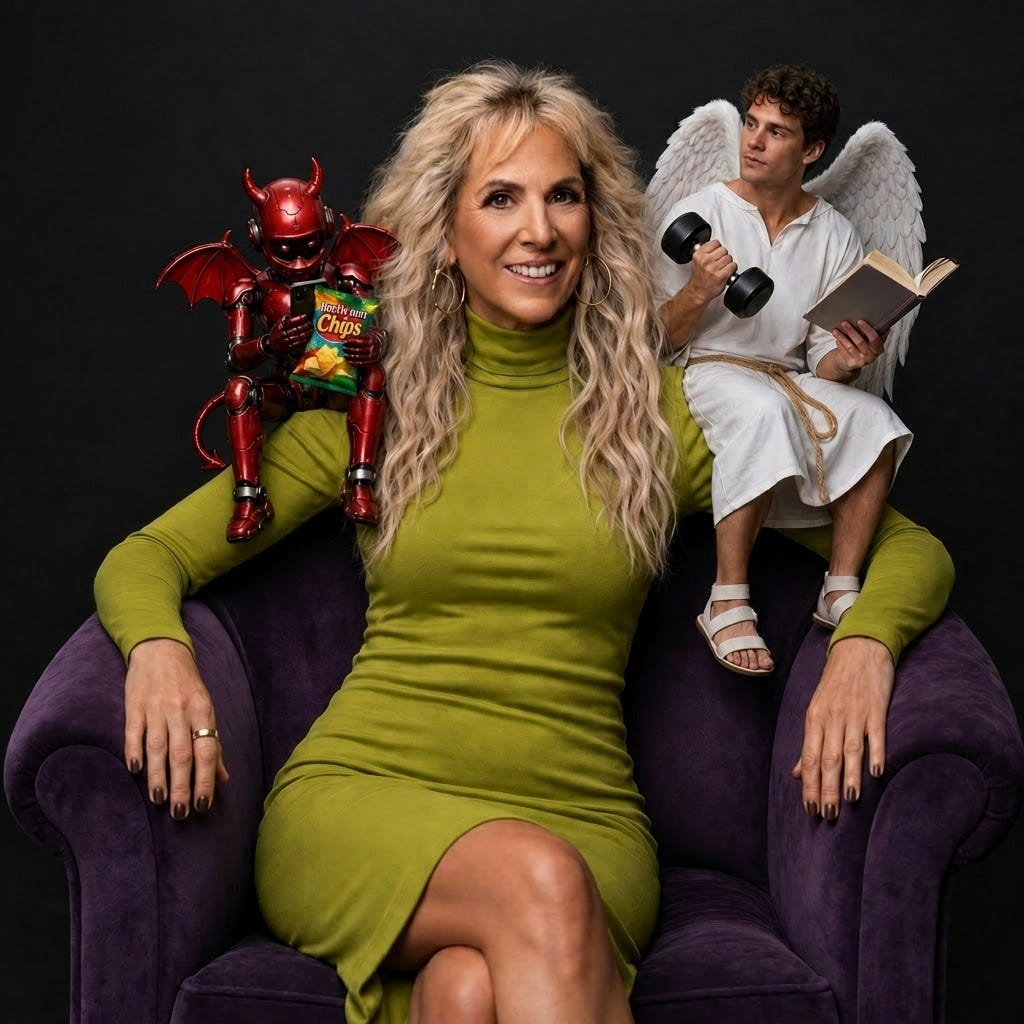
Let’s start with what you’re doing every day.
Not what you intend to do.
What you really do.
65% of your daily behaviors happen automatically.¹ You’re not deciding. It’s just what you’re used to doing.
The average American checks their phone 96 times a day.² That’s not a choice. That’s a reflex.
And now, more people are becoming “addicted” to talking to their AI agents. They are getting into the habit of not writing or thinking without a bot giving “advice.”
Your real habit stack
Here’s what the data says most people are doing:
Sleep. 6 out of 10 adults don’t get enough.³ 52.7% stream media right before bed. 73% of them say it’s purely habit. Only 17.5% unplug from tech before sleeping.⁴
Movement. Most people think they move more than they do. Sitting is the default. Movement now requires a deliberate intervention.
Eating. Meal timing has collapsed. Stress eating has normalized. Most people rank sleep higher than eating well. Then blow both by scrolling at 11pm.⁴
Connection. In-person, unmediated human contact is declining. We schedule what used to be spontaneous, only to cancel it when something digital distracts.
Learning. Passive consumption has replaced active learning. The feed is always easier than the book.
None of this is a character flaw. It’s the predictable result of a tech ecosystem designed to keep you scrolling, not thriving.
Ironically, tech can fix some of the habits it created.
Forget the hype. Here’s where it’s genuinely moving the needle.
Sleep tracking with real intelligence. Devices like the Oura Ring and WHOOP use AI to connect your inputs (alcohol, late screens, stress, exercise timing) to your outputs (recovery score, HRV, readiness). You stop guessing and start seeing causation. One week of data will show you things about your own patterns that would take months to surface otherwise.
Calendar defense. Reclaim.ai uses AI to protect your deep work time and reschedule around your actual energy levels. It turns “I’ll get to it” into a blocked time slot. Habit change without willpower.
Sound as a tool. Endel generates AI-powered soundscapes calibrated to your circadian rhythm. Neurologically designed wind-down audio that signals your brain to shift gears. And check out Brain.fm. This week, I had Beulah (my combined AI agents and my bot “therapist”) create a music playlist for me and then had Alexa blast it out to motivate me first thing in the AM. Other than possibly annoying the neighbors, it was just what I needed (as the Cars said).
The AI conversation most people aren’t having. Claude, ChatGPT, whatever you use. Most people use it for tasks. Almost nobody uses it for self-examination. That’s where it gets interesting. I have been using it to map out each week, ensuring I have 70% analog activities and only 30% digital ones.
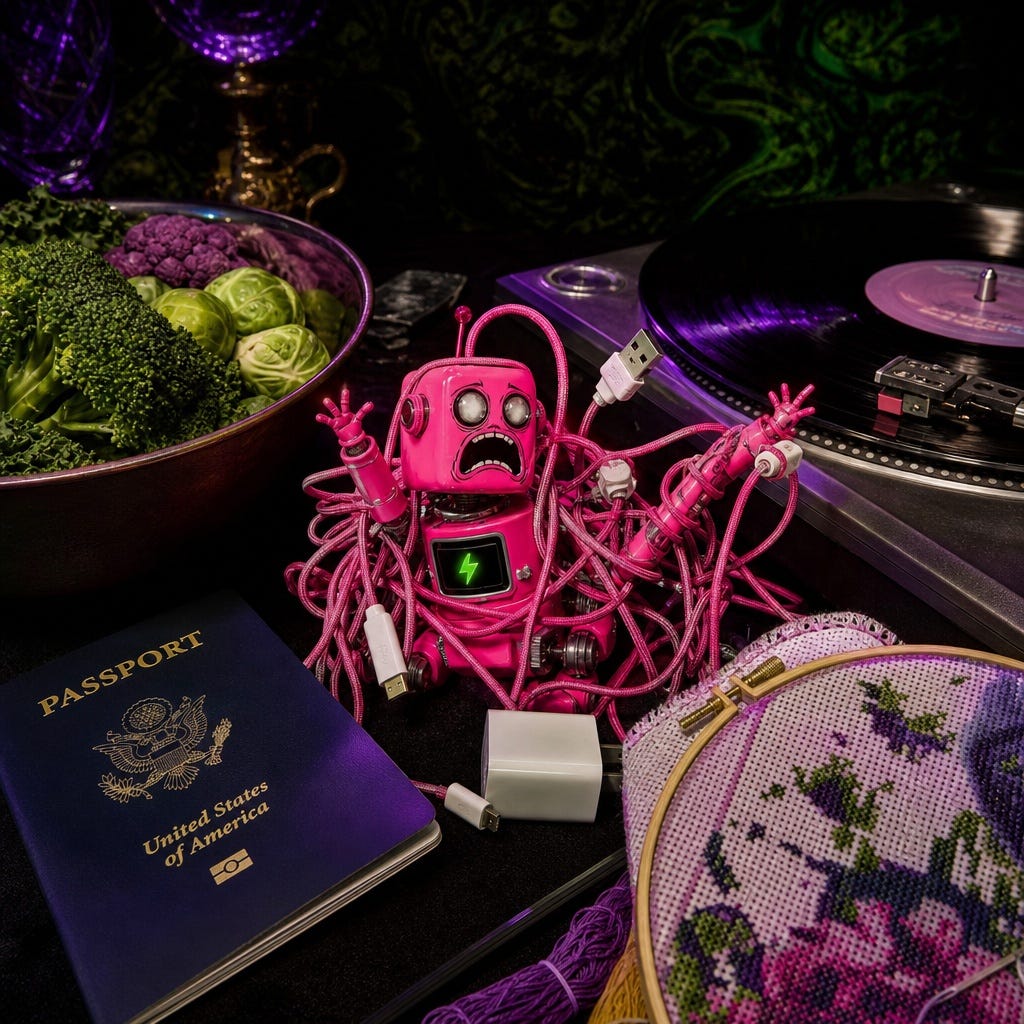
Figure out what YOU need to change
But remember…AI is not a real human or a therapist. It’s just taking what you’re telling it and aggregating it into a response, based on data. So, be honest and specific. In fact, you should also ask your family and close friends these questions. They may see and know things that some non-human agent will never perceive.
Open your AI tool. Copy and paste this:
“I want to honestly audit my daily habits. Walk me through questions about a real weekday, from when I wake up to when I sleep. Help me identify which habits are intentional, which are automatic, which are tech-driven, and where I’m losing time or energy I didn’t consciously decide to give away.”
Walk it through your actual day. The phone before your feet hit the floor. The lunch you ate while scrolling. The TV you turned on because the quiet felt weird.
What comes back isn’t generic. It’s yours.
Run this one weekly:
“Based on what I’ve shared, what am I consistently avoiding? And what habit am I using to avoid it?”
That one will annoy you. Good.
Do this soon.
Tonight: Set your phone to Do Not Disturb at a fixed time. Charge it in another room. Sleep data shifts within a week.
Tomorrow morning: Before you touch your phone, do one analog thing. Coffee without a screen. Five minutes outside. One page of a physical book.
This week: Pull up Screen Time (iPhone) or Digital Wellbeing (Android). Review the data. Most people are off by two hours. That gap is your starting point.
This week, AI-assisted: Run the audit prompt above. Give it honest answers.
Ongoing: I keep 30% of my life digital and 70% analog. The AI gets the 30%. The rest belongs to me. I keep a (paper) calendar on my desk with my plans, so I don’t cheat.
What habit are you running on autopilot that you never chose? Comment and tell me.
If you want the deeper dive on behavior science, habit history, and the three-column exercise I use to audit my own life, that’s in this week’s Wired for 100.
Want to hear about some of my childhood traumas that led to bad habits? Subscribe to YOUR NERVE. It includes 22+ more ways to live a better life.
Stay spicy, Nancy AF
Written and designed with my AI collaborator, Beulah. She researches, drafts, and argues with the data. I direct, push back, and take full responsibility for the final words.
Sources
¹ ScienceDaily, Georgetown University Medical Center, December 2025 ² Cropink Screen Time Statistics, 2026 ³ National Sleep Foundation Sleep in America Poll, 2025 ⁴ NapLab Sleep Statistics, 2025/2026